2026-01-02
Medium voltage metal enclosed switchgear is the backbone of safe, maintainable power distribution for facilities that cannot tolerate unplanned downtime. If you are specifying MV switchgear for an industrial plant, data center, utility interface, or OEM skidded package, the technical details matter: insulation levels, short-circuit ratings, compartmentalization, interlocks, and installation footprint can determine whether your system is resilient—or fragile—under real fault conditions.
From a manufacturer’s perspective, the most efficient procurement projects are the ones where the owner provides a clear single-line diagram, fault-level study, and operating philosophy (manual/remote, maintenance approach, and expansion plans). This article focuses on practical specification and evaluation steps, with examples drawn from our medium voltage switchgear portfolio.
In the IEC 62271-200 framework, “metal enclosed” describes switchgear where primary components are contained within a grounded metal enclosure, using segregation and internal partitions to manage safety, serviceability, and fault containment. In practical engineering terms, metal enclosed MV switchgear is designed to:
Owners often use “metal enclosed” and “metal clad” interchangeably, but the procurement consequences can be significant. Metal-clad designs usually imply a higher level of compartmentalization and defined withdrawable circuit breaker construction, while metal-enclosed covers a broader set of architectures. In either case, the correct approach is to specify the performance requirements (fault rating, insulation, IP, interlocks, and internal arc strategy) and then validate that the offered design meets them under the applicable standard.
A switchgear project typically succeeds or fails based on whether the electrical ratings are aligned with the upstream source capability and the downstream load profile. In MV systems, two common “late-stage surprises” are (1) underestimated short-circuit duties and (2) insulation levels that do not match the service environment or surge expectations.
| Specification item | Why it matters | Practical guidance | Example MV lineup values |
|---|---|---|---|
| Rated voltage (kV) | Defines insulation coordination and device class | Match nominal system voltage and grounding method; confirm equipment class (e.g., 3.6/7.2/12 kV) | 3.6, 7.2, 12 |
| Power-frequency withstand (1 min) | Validates basic insulation strength | Specify per standard voltage class and site altitude/clearance needs | 42 kV (12 kV class example) |
| Lightning impulse withstand (BIL/LIWL) | Critical for switching surges and lightning exposure | Coordinate with surge arresters and cable/overhead interfaces | 75 kV (12 kV class example) |
| Main busbar rated current (A) | Thermal limit under continuous load and ambient conditions | Use realistic load growth and derating; verify ventilation/cooling approach | 630–4000 A options (design-dependent) |
| Short-time withstand current & duration | Must exceed available fault current until protection clears | Specify kA and time (commonly 3–4 s) based on coordination study | 25–50 kA for 4 s (application-dependent) |
| Enclosure and compartment IP rating | Defines protection against ingress and accidental contact | Align to indoor/outdoor environment; confirm door-open condition rating | IP4X enclosure, IP2X when door open (typical) |
| Mechanical/electrical endurance | Predicts lifecycle cost and maintenance planning | Prefer vacuum interrupter solutions for high operations; request test evidence | 10,000 operations (example for M2 class) |
Before freezing the lineup design, validate these three items together: the utility/transformer source impedance (available fault kA), protective device clearing times (seconds), and the specified short-time withstand rating. The short-time rating is not a “paper parameter”—it directly influences busbar sizing, bracing, internal barriers, and pressure relief design, which can affect footprint and cost.
Medium voltage metal enclosed switchgear is purchased primarily to control risk: risk to personnel, risk to uptime, and risk to adjacent equipment. A robust safety concept should be visible in the design features and in the routine test documentation.
Where the operating philosophy allows, adding remote switching, condition indication, and relay visibility reduces the need for front-of-panel interaction under energized conditions. Even basic design elements—inspection windows, clear mimic diagrams, and segregated control rooms—help operators confirm status without bypassing procedures.
A specification for MV metal enclosed switchgear should describe the functional units needed—not just “a lineup.” Common lineups include combinations of:
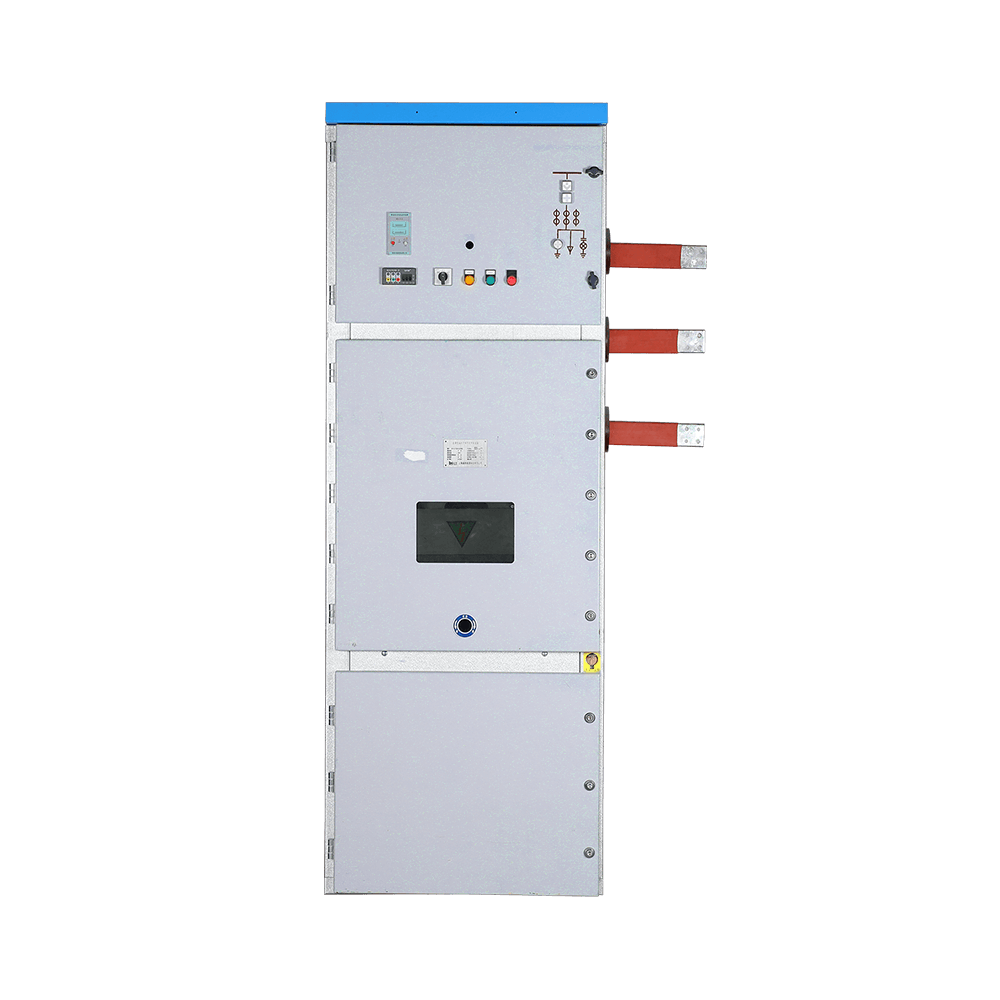
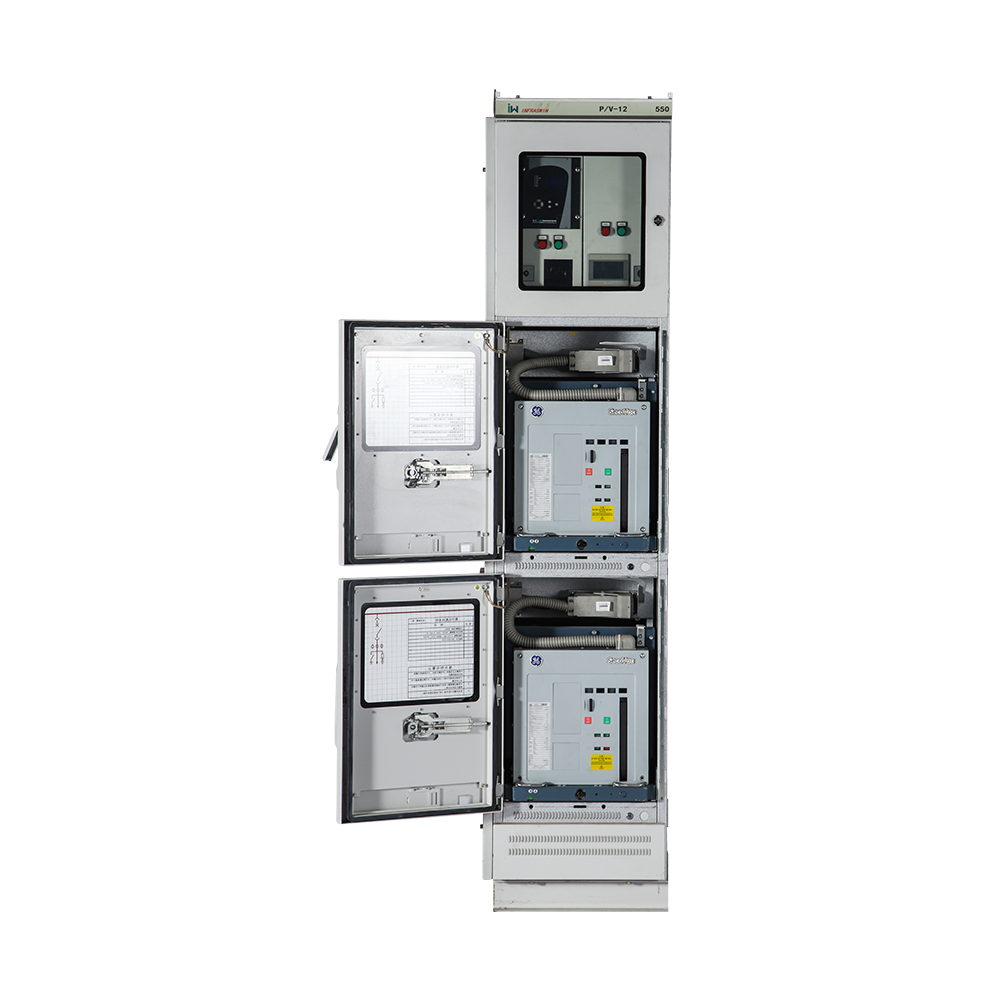
Many projects do not have the luxury of a large switchroom. In these cases, the correct design is the one that preserves segregation and maintainability while fitting the physical envelope. For example, our P/V-12(D)-W550 removable AC metal-enclosed switchgear is built for 12 kV class indoor systems and is intended for smaller space environments by integrating two vacuum circuit breakers into a single equipment configuration, while maintaining compartmentalized construction and a dedicated pressure relief channel.
In practical terms, compact switchgear should still provide the same fundamental outcomes: clear isolation boundaries, safe earthing operations, defined cable termination access, and a protection/relay scheme that is testable without unsafe workarounds.
For most MV projects, installation constraints are the hidden cost driver. Floor loading, aisle clearances, trench locations, rear access needs, and cable bending radii can force late layout changes. Your RFQ should therefore include mechanical and routing assumptions—not just electrical ratings.
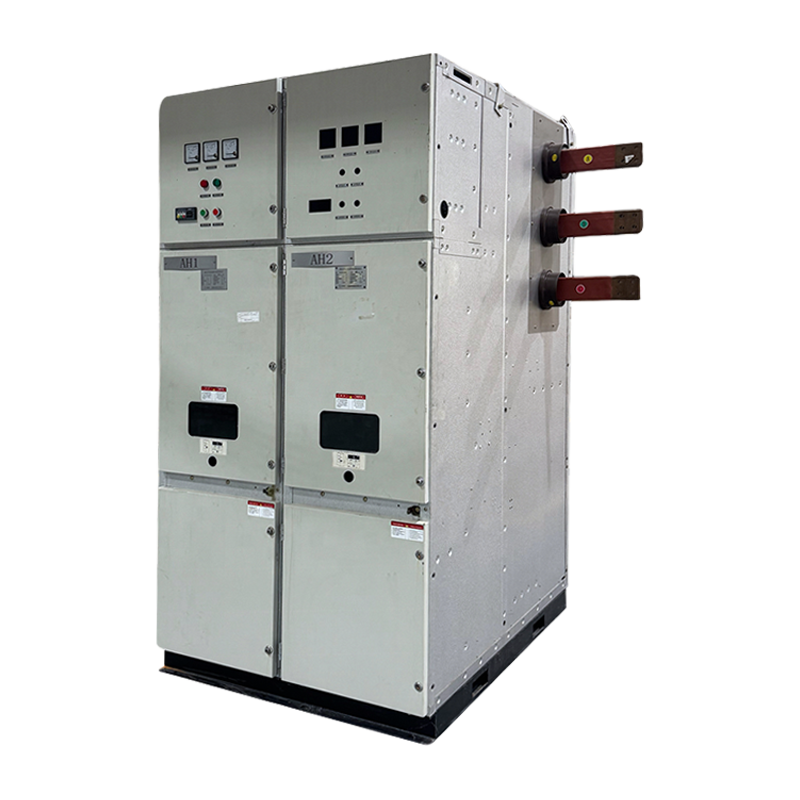
As a reference point for indoor, withdrawable MV switchgear lineups, typical section height is often around 2200 mm, with common widths of 800–1000 mm and depth around 1500 mm depending on busbar current and cable routing. Some configurations require additional rear cabinet depth for up/down cable routing or busbar in/out transitions, which should be captured explicitly in the GA package to avoid site clashes.
Medium voltage metal enclosed switchgear is not a commodity purchase. Beyond the datasheet, buyers should confirm the manufacturer’s engineering controls, process discipline, and ability to support commissioning. The objective is to reduce technical risk and lifecycle cost—not to optimize only first price.
If you need a concise overview of our manufacturing scope and product lines for internal stakeholder alignment, you can use the downloadable materials on our support page as a starting reference.
A well-specified medium voltage metal enclosed switchgear lineup is one that is aligned to your fault-level study, insulation coordination, operating practices, and site constraints. The most persuasive “value” is not a feature list—it is verified performance under the standards, safer maintenance boundaries, and a layout that installs without compromises.
If you share a single-line diagram (including source data and protection philosophy), a qualified manufacturer can quickly propose an optimized configuration—often improving footprint while maintaining key ratings such as 4-second short-time withstand, appropriate IP protection, and clear interlocking/earthing logic. If you would like an engineering review for your project, you can reach our team via the contact page.
Recommended Products

Your one-stop supplier for energy management solutions.
Products
Contact Us
720 Yuandong Road, Fengxian District, Shanghai, China
+86-19101772387
+86-19101772387
info@infraswin.com

 English
 中文简体
中文简体
 Español