Infraswin Energy: Making Energy More Efficient and Computing More Reliable
2026-10-23
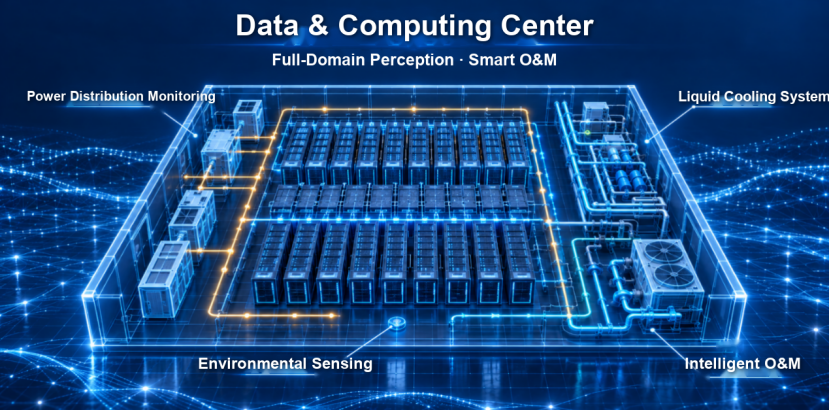
Behind every data transaction, every model training run, and every intelligent application response lies the support of continuous, stable power.
As data and computing centers grow toward higher density and larger scale, energy infrastructure faces new requirements: it must support ever-growing power demand while balancing construction efficiency, operational safety, and long-term energy consumption.
How can power support computing more efficiently? How can infrastructure keep pace with business growth?
Starting from an integrated power supply and distribution approach, Infraswin Energy focuses on the energy construction and operational needs of data and computing centers, building a more reliable and efficient energy foundation for computing development through system integration, modular configuration, and digital management.
1. Computing Power Keeps Growing: Power Distribution Calls for Systems Thinking
The power supply and distribution system of a data and computing center involves multiple stages, including high-voltage distribution, transformers, low-voltage distribution, UPS (uninterruptible power supply), and monitoring and protection. How the equipment is connected, coordinated, and managed in a unified manner directly determines overall operational performance.
Traditional decentralized construction often requires coordinating multiple equipment suppliers, with numerous field interfaces, complex wiring, and considerable time for installation and joint commissioning. As project scale expands, optimizing individual devices alone can no longer meet overall construction and operational needs.
The value of integrated power supply and distribution lies in bringing all stages into a unified design: coordinating equipment selection, spatial layout, electrical connections, protection coordination, and monitoring interfaces, so that equipment works together seamlessly, and construction, delivery, and subsequent maintenance are well connected.
For data and computing centers, choosing a power supply and distribution solution requires considering both equipment performance and system efficiency.
2. Efficient Energy Use Starts with Optimizing the Power Supply Chain
The energy efficiency of a computing center is closely related to the power distribution architecture, equipment operating status, and load matching.
Compact layout, proper configuration, and standardized integration can optimize power distribution paths and space utilization, reduce unnecessary connection stages, and create conditions for lower power losses.
Meanwhile, moving prefabrication-suitable wiring, busbar assembly, and system commissioning forward to the factory helps reduce on-site construction complexity and improve installation and commissioning efficiency.
Space matters in the planning stage, delivery in the construction stage, and energy consumption in the operation stage. The value of an energy solution should be measured over the entire project life cycle, so that upfront investment and long-term operation reach a more reasonable balance.
3. Reliable Power Supply: Building Protection and Maintenance into the Overall Design
For data and computing centers in continuous operation, power supply reliability is a fundamental requirement.
Reliability comes from the combined effect of multiple factors: whether the distribution architecture is reasonable, whether protection settings match, whether anomalies are detected in time, whether faults can be effectively isolated, and whether necessary maintenance conditions are in place.
Infraswin Energy's technologies such as circuit breaker setting coordination, arc flash protection, and UPS configuration embody an overall approach that spans from equipment protection to business continuity assurance. In specific projects, appropriate protection and safeguard measures should be determined based on load levels, capacity requirements, and operating modes.
Only by implementing safety requirements in every stage of design, configuration, commissioning, and O&M can solid support be provided for the continuous operation of computing services.
4. Configuration That Adapts to Business: Reserving Room for Future Growth
Different types of data and computing centers vary in construction scale, load characteristics, and commissioning schedules. The same project may also go through phased construction, gradual rack rollout, and continuous expansion. Therefore, the power supply and distribution system must meet current needs while allowing for future development.
Modular design offers a more flexible configuration approach. Combining distribution, transformer, and UPS units according to actual project needs, and planning expansion interfaces and maintenance space in advance, helps improve the system's adaptability to different construction stages.
For modular UPS with appropriate design conditions, online maintenance and module replacement also bring convenience to O&M. Such capabilities need to match specific equipment configuration, redundancy design, and operational requirements.
Keeping the construction pace in step with business growth makes it easier to respond to changes in computing demand.
5. Making Operating Status Visible, Grounding O&M Decisions in Data
After the power supply and distribution system is put into operation, whether equipment status is clear, whether anomalies are detected promptly, and whether faults are located accurately all affect O&M efficiency.
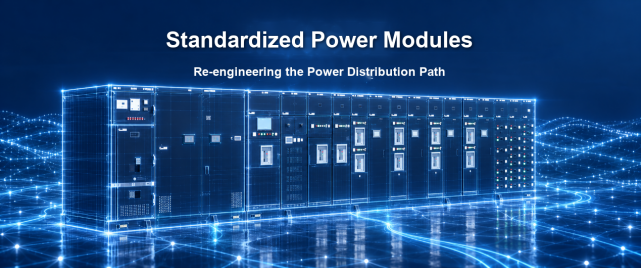
Through centralized monitoring, the operating parameters, status information, and alarms of key equipment are brought into a unified interface, helping O&M personnel gain a more complete view of the power supply chain and reducing the time spent searching for scattered information. Continuously accumulated operating data also provides a basis for analyzing load variations, identifying abnormal trends, and scheduling maintenance plans.
The value of digital O&M lies in making data serve practical work: detecting anomalies earlier, locating problems faster, and making operational adjustments better grounded. From construction delivery to long-term operation, every piece of monitoring information can be converted into usable management support.
The development of computing power requires matching energy infrastructure. From optimized distribution architecture to modular integration, from electrical protection to centralized monitoring, improvements at every stage create the conditions for the stable operation of data and computing centers.
For data and computing center construction, Infraswin Energy advocates starting from actual needs, focusing on system efficiency, and considering safety, energy saving, delivery, and O&M in a unified manner, so that energy infrastructure better serves business development.
Infraswin Energy — making energy more efficient and computing more reliable.