Folding a Power Station into a Shipping Container, Delivering Electricity Where the Grid Cannot Reach
2026-11-23
How a 20-ft energy station solves off-grid power supply in remote areas
In a gorge 4,500 meters above sea level, the cost of running one kilometer of power line is enough to buy several generators.
Power supply in remote areas is difficult, and “running a line” is expensive: in high mountains, gorges, deserts, and on islands, a single line often serves only a few households or a single site, yet costs more than three times as much as on flat terrain. Diesel generation is costly, hard to transport, and difficult to maintain — in winter, fuel has to be carried in on people’s backs or by yak.
A different approach: don’t send the power over — ship the power station there.
I. A Power Station That “Unfolds”
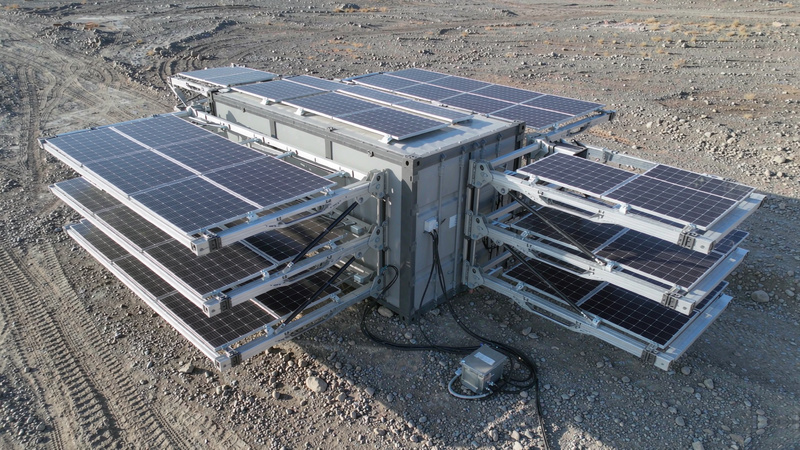
A 20-ft standard container energy station is a standard box in transport mode, compliant with road width and height limits, and can be hauled by an ordinary low-bed trailer.
On site, the 5 photovoltaic panels laid flat on the roof are ready to use; the three-tier folding arms on both sides unfold and release another 10 panels. Two people, two hours — 9.375 kW of PV spreads out into a light-collecting area of nearly 43 square meters.
II. Power by Day; What About Nights and Overcast Weather?
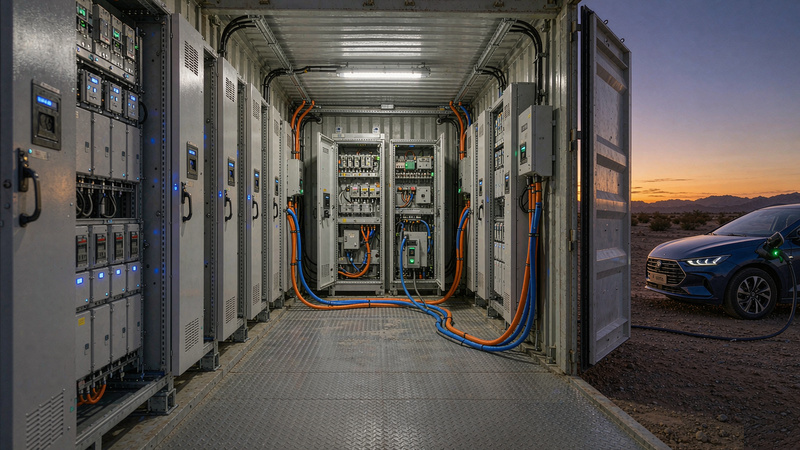
Inside the box are 60 kWh of lithium iron phosphate (LiFePO4) storage and a 10 kW three-phase hybrid inverter, with automatic switching among grid-tied, off-grid, and backup modes.
The off-grid design basis is practical: two consecutive overcast and rainy days at 25 kWh per day, keeping lighting, communications, and medical equipment powered without interruption. Depending on the solar resource zone, annual generation ranges from 5,700 to 9,700 kWh.
III. When a Car Arrives, It Can Even Feed Power Back
The station is equipped with an 11 kW three-phase bidirectional charger (V2G). Connected to an electric vehicle, it can replenish 22 kWh in two hours — like temporarily adding a mobile energy storage unit to the site. For scenarios such as emergency power support and repair operations that “only lack a few hours of electricity,” this is far faster than dispatching another generator.
IV. What Really Changes Is the Delivery Method
No civil works, no concrete foundations: crane it into place, secure it with ground anchors, and it is ready for operation. Overall availability is 98%; design life is 15 years, with 25 years for PV and 6,000 cycles for storage; in emergencies, unfolding and grid connection are completed within 3 hours.
For mines, islands, border stations, and communication base stations without grid coverage, the past meant “waiting for power to come over” — now, it is “power delivered to the door.”