How to Select Safe and Reliable UL Power Distribution Solutions for Electrical Systems
2025-12-23
1. Key Differences and Application Scenarios of UL 891 and UL 508A
In the design of industrial and commercial power distribution systems, correctly understanding and applying Underwriters Laboratories (UL) standards is fundamental to ensuring electrical safety and compliance. Among these, UL 891 and UL 508A are two frequently referenced yet distinct standards with different application scopes.
UL 891: Focus on Low-Voltage Switchboards
• Scope of Application
Suitable for low-voltage AC power distribution centers, switchboards, and service equipment with rated voltages not exceeding 600V.
• Core Requirements
Emphasizes safety protection capabilities under fault conditions, including structural strength, short-circuit withstand strength (e.g., busbar support), temperature rise limits, dielectric testing, and explicit requirements for integrated overcurrent protection.
• Typical Applications
Main distribution panels in buildings, power supply incoming sections of motor control centers (MCCs), data center power distribution units (PDUs), etc.
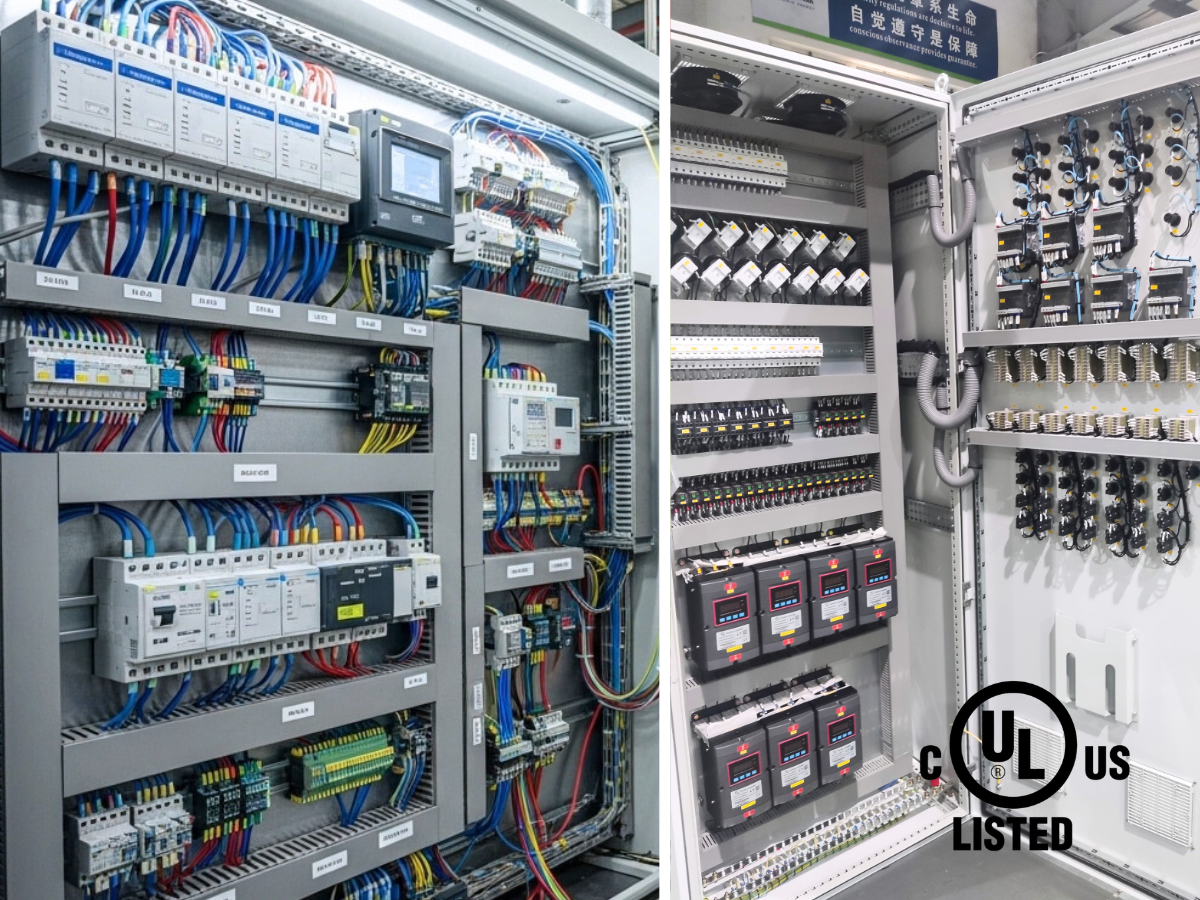
UL 508A: Focus on Industrial Control Panels
• Scope of Application
Covers the assembly and manufacturing of industrial control panels used in industrial machinery and equipment.
• Core Requirements
Focuses on the safe assembly of control circuits, including component selection, wiring standards, spacing (electrical clearance and creepage distance), matching of protective devices (e.g., circuit breakers, relays), and labeling.
• Typical Applications
Automated production line control panels, pump station control panels, HVAC system control panels, etc.
• Simple Distinction
It can be understood that UL 891 governs "power distribution," while UL 508A governs "control functions." In a complex motor control center (MCC), the main incoming busbar section may need to comply with UL 891, while the individual motor control units containing contactors and PLCs must comply with UL 508A.
2. The Engineering Philosophy Behind the Standards: Safety, Reliability, and Maintainability
These two major standards are not merely "exams" for market access; they embody profound engineering value:
• Preset Safety Boundaries
Through rigorous type tests (e.g. short-circuit, temperature rise), extreme conditions are simulated to ensure products can handle unexpected situations throughout their lifecycle.
• Standardized Design and Installation
Unified rules for conductor handling, grounding, and labeling significantly reduce on-site installation error rates, enhancing system consistency and maintainability.
• Clear Definition of Responsibility
Using UL Listed or Recognized components and assembling them in compliance with the standards clarifies the responsibility boundaries between manufacturers and integrators, protecting the interests of all parties.
3. Recommendations for Engineers on Selection and Verification
When addressing specific projects, we recommend the following:
• Clarify Requirements
First, determine whether the equipment is primarily for power distribution, control, or both, to preliminarily identify the governing standard.
• Verify Certification
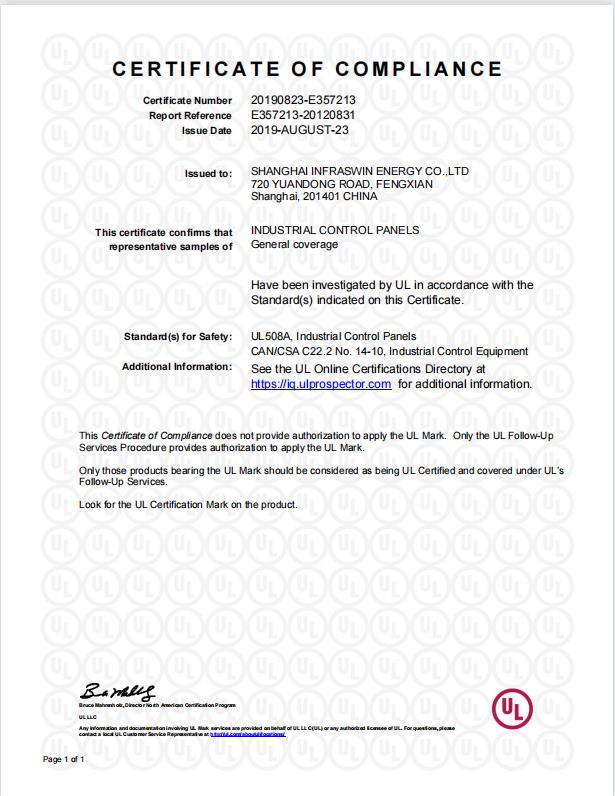
Request the UL Listing Page from suppliers to confirm compliance with specific standards (e.g., UL 891 or UL 508A).
• Pay Attention to Details
For integrated systems, do not only examine the cabinet certification. Also ensure that internal critical components (e.g. circuit breakers, PLC power supplies) use UL Recognized components and that the assembly process complies with the standards.
• Choose the Right Partner
Prioritize suppliers like Shanghai Infraswin Energy Co., Ltd. which possess in-depth understanding of standards, independent R&D capabilities for products, and extensive system integration experience. We can not only provide compliant products but also engage from the front-end design stage to help optimize the overall solution and mitigate potential technical and compliance risks.